
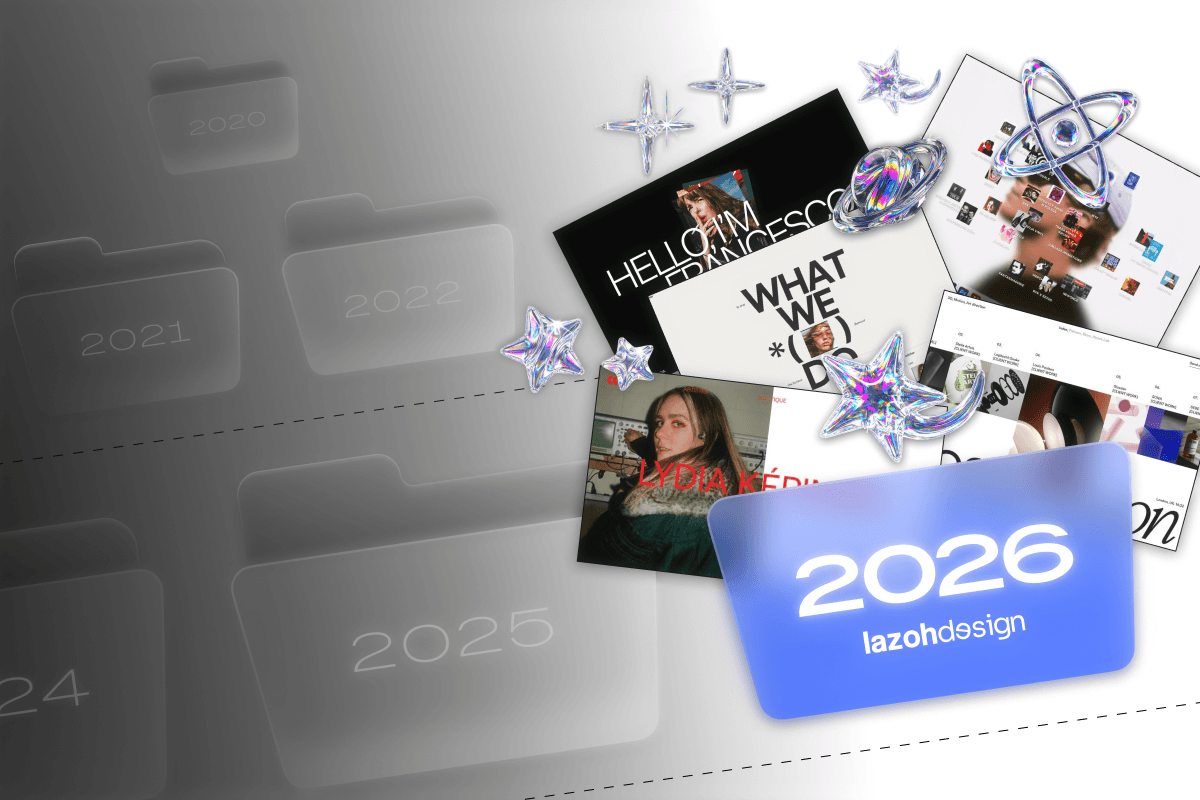
How to Improve Your Design Portfolio in 2026: A Guide for Freelance Designers
Introduction
Your design portfolio is your most important business asset. It's your first impression, your proof of competence, and your sales tool — all at once. Yet most designers underinvest in it.
In 2026, the bar for portfolios has risen significantly. Clients and hiring managers are looking at dozens of portfolios for every role. Standing out requires more than good work — it requires strategic presentation, compelling storytelling, and a portfolio experience that reflects your design skills in itself.
Here's the complete guide from the Lazoh Design team.
1. Lead with Your Best Work, Not Your Most Recent Work
The biggest mistake designers make is organizing their portfolio chronologically. Your portfolio should be curated, not documented. Lead with your 3–5 strongest pieces, regardless of when they were created.
Ask yourself: 'If a client only saw one project, which one would make them want to hire me?' Start there.
2. Write Case Studies, Not Just Pretty Slides
Images without context are just mood boards. A compelling case study tells the story of a project: the problem, the process, the solution, and the outcome.
Strong case studies answer:
• What was the client's challenge?
• What was your strategic and creative approach?
• What design decisions did you make and why?
• What were the measurable results?
Quantified results (conversion rates, engagement, revenue impact) are gold. Even rough metrics ('increased engagement by ~40%') add credibility.
3. Specialize, Don't Generalize
In 2026, generalist designers struggle to command premium rates. The most successful freelancers position themselves as specialists: 'brand identity for DTC companies,' 'UI/UX for fintech startups,' 'design systems for SaaS products.'
Your portfolio should reflect a point of view. If you work in every style and every category, clients don't know what they're getting — and they default to whoever feels most certain.
4. Your Portfolio Is a Design Project — Treat It That Way
The container matters as much as the content. A poorly designed portfolio page signals that you apply your skills selectively. Use your portfolio as proof of concept — let it demonstrate your attention to detail, typographic sensibility, and UX thinking.
In 2026, Framer is the preferred platform for designer portfolios due to its design flexibility, fast load times, and no-code customization. Webflow is a strong alternative for more complex structures.
5. Include Real Client Work and Personal Projects
The ideal portfolio has a mix of client work (proof that real companies trust you) and personal projects (proof of your creative ambition and aesthetic direction). If you're early in your career and lack client work, invest in self-initiated projects — they're often more impressive than commercial work anyway.
6. Optimize for Recruiters AND Algorithms
Many clients and recruiters find designers through search. Optimizing your portfolio for SEO — adding descriptive alt text to images, writing keyword-rich project descriptions, having a clear 'about' page — increases your chances of being discovered organically.
Also make sure your Behance, Dribbble, and LinkedIn profiles are updated and link to your main portfolio.
7. Add Social Proof
Client testimonials, recognizable brand logos, and awards significantly increase conversion. Even a single strong testimonial from a real client changes the way visitors perceive your work.
8. Keep It Updated
A portfolio with projects from 3+ years ago signals inactivity. Set a reminder every quarter to review and refresh your portfolio with your most recent and relevant work.
The Role of Personal Branding
Your portfolio is part of your larger personal brand. Consistency across your website, LinkedIn, social media, and how you communicate your expertise builds the kind of recognition that leads to inbound opportunities.
Consider creating content around your niche — sharing design process posts, writing about your thinking, or contributing to design communities like those being built at Lazoh Design. Visibility compounds over time.
Final Thoughts
Your portfolio is never 'done' — it's always a work in progress that reflects where you are and where you want to go. The designers who invest consistently in their portfolio and personal brand are the ones who build sustainable, well-paid freelance careers.
Are you a designer looking to grow your career and connect with other creative professionals worldwide? Join the Global Designers Community at Lazoh Design.
🎁 Explore Cre8journal.com — Browse portfolio templates, personal branding resources, and tools curated for designers in the Cre8journal → https://www.cre8journal.com/suscribe-page


